
Debt Settlement
Bank Account Frozen by a Cyber Cell? The Exact Steps to Unfreeze It in India
C
10 minKey Highlights
You owe ₹2.4 lakh on a personal loan you stopped paying eight months ago. The calls have changed tone. Now a recovery officer is offering a "one-time settlement" — pay ₹1.3 lakh and we'll close the file, he says, like he's doing you a favour. You're staring at that number, wondering the only thing that matters right now: how low will they really go?
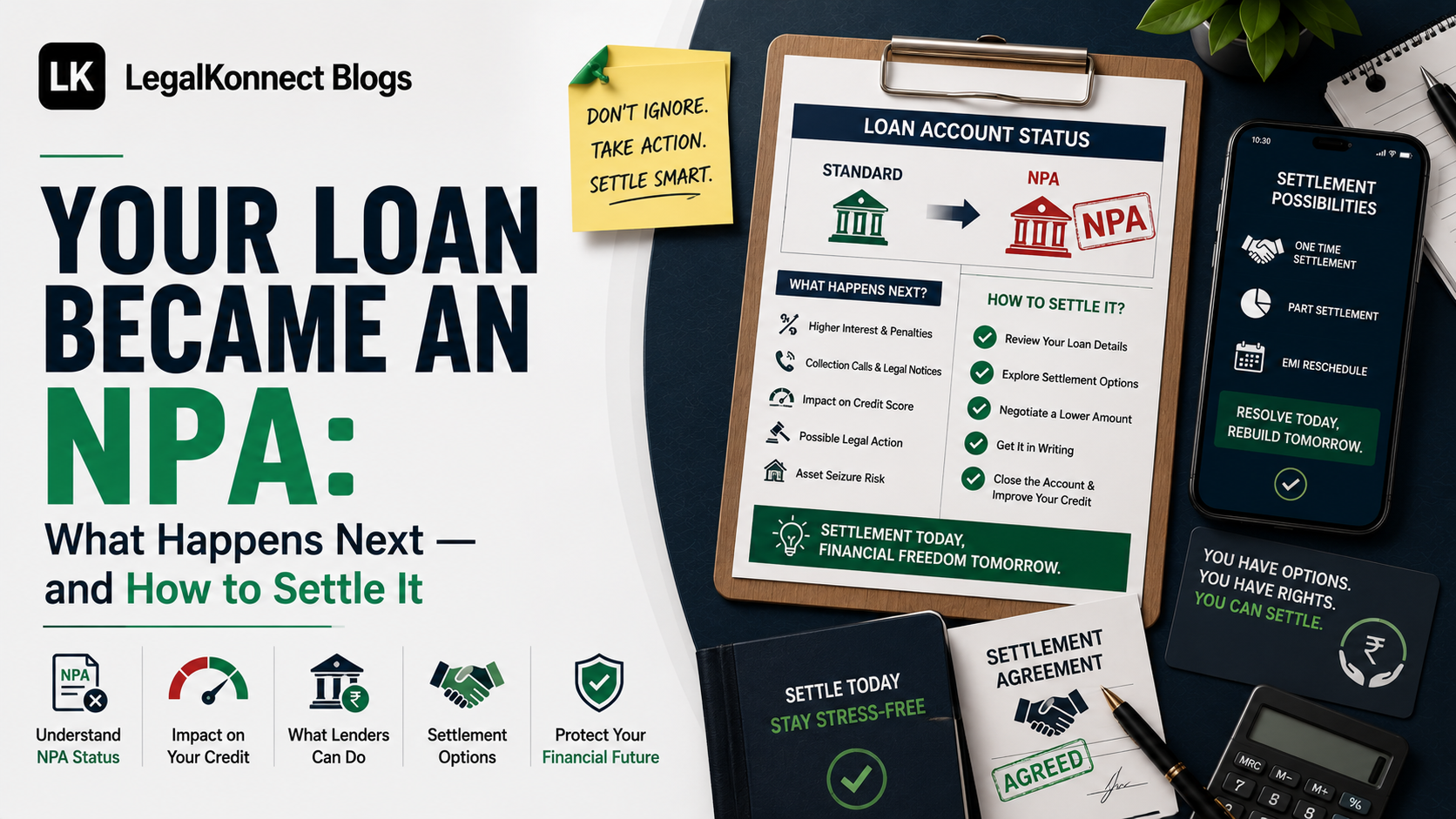
On an unsecured personal loan that's already gone bad, lenders typically settle for 40–70% of the outstanding — and the older and more written-off the loan, the lower they go. But the percentage is the easy part. What protects you is the NOC and the credit-bureau reporting, and you lock both in writing before you pay a rupee.
An NOC is the No-Objection Certificate — the lender's written proof that you owe nothing more. Get this wrong and you can pay the discounted amount and still be chased, or watch your CIBIL read "settled" for the next seven years. The rules do lean your way now, though: since 26 April 2024, a credit bureau that doesn't fix a wrong entry within 30 days owes you ₹100 a day. So let's get both halves right — the number, and the paperwork that makes the number mean something.
There's no official percentage. A one-time settlement (OTS) is a discretionary call by the lender, not a fixed formula. But in practice the discount tracks one thing above all: how dead the loan already looks on the lender's own books.
Just a few months late (not yet an NPA): little to no discount. The lender still expects to recover the full amount with interest, so it has no reason to cut.
Freshly bad (roughly 90 days to a year overdue): this is where settlements open up — commonly 50–70% of the outstanding. Once a loan tips into NPA territory, the lender would rather bank a partial recovery now than chase you for years.
Old, written-off NPA (one to three years or more): the deepest cuts, often 30–50%, sometimes lower. The lender has already booked it as a loss, so anything you pay is found money for them.
Two more levers. A single upfront payment buys the steepest discount; spreading it over two or three instalments shrinks it. And on a secured loan — a home or car — the lender holds collateral it can sell, so the discount is far smaller; it only goes deep when the collateral is worth less than the dues. Credit-card outstandings behave like unsecured loans and often settle around 40–60%.
One thing worth knowing before you negotiate: the "manager-approved final figure" a recovery officer quotes is rarely actually final. There's usually another 5–10% in the room if you hold firm and offer a clean lump sum. And if the calls have crossed into pressure or threats, that's a separate fight with its own rules — don't let it stampede you into a worse number. Walk in with a figure anchored to your loan's stage. Don't treat the first "final" offer as the floor.
You can win the negotiation and still lose. The danger sits in what happens after you pay.
The NOC (sometimes called a No-Dues Certificate) is the single most important document in this whole exercise — written proof from the lender that the account is closed and nothing more is owed. Without it, you've handed over a lump sum on a verbal promise. So the rule is blunt: the NOC must be a written clause in the settlement letter, issued the moment your payment clears — and you sign nothing and pay nothing until that letter exists.
There's a second trap that catches people who owe the same lender more than one thing. Under Section 59 of the Indian Contract Act, 1872, when you make a payment you have the right to direct which debt it clears — but you must say so, in writing, at the time of payment. Skip that, and Section 60 lets the lender apply your money to whichever of your debts it prefers, then keep chasing you on the loan you thought you'd just settled. So when you pay, state it plainly on the transaction and in your covering letter: this payment is the full and final settlement of loan account number XXXX.
For a secured loan, you have a sharper tool. An RBI direction effective 1 December 2023 requires banks and NBFCs to return all your original property documents and remove the registered charge within 30 days of repayment or settlement — and if they delay, they owe you ₹5,000 for every day past the deadline. That rule covers settlement, not just full repayment, so a lender sitting on your property papers after an OTS is now on a clock with a price tag.
Before you pay, make the settlement letter say four things: the amount is full and final, the NOC will be issued on receipt, the account will be reported to the credit bureau as settled/closed, and the lender has no further claim. Those four lines are what you're really buying.
Here's the part people find out too late: a settled loan and a closed loan are not the same on your credit report, and the difference sticks.
"Closed" means you paid in full — neutral to positive. "Settled" means you paid less than you owed, and the bureau flags it as exactly that: a lender took a haircut on you. It typically knocks 75–100 points off your score and stays visible on your CIBIL report for about seven years from the date of settlement. For that window, most mainstream lenders will treat a fresh application from you with suspicion.
So go in clear-eyed. Settling protects your cash and stops the bleeding, but it leaves a mark. You usually can't turn "settled" into "closed" unless you later pay the waived balance, which defeats the point. What you can control is that the lender reports it accurately — as "settled", not the harsher "written off" — and that it updates at all.
This is where the rules now back you. Under RBI's compensation framework — in force since 26 April 2024, built on the Credit Information Companies (Regulation) Act, 2005 — if you raise a dispute and the bureau and lender don't resolve it within 30 days, you're owed ₹100 for every day it stays unfixed. Raise it on CIBIL's site, keep the reference number, and the clock starts. If a wrong entry costs you a loan or causes real distress and nobody fixes it, you can also go to the District Consumer Disputes Redressal Commission under the Consumer Protection Act, 2019, for compensation.
It happens more than it should. You pay the agreed settlement, then the NBFC suddenly says the NOC will only come on payment of the full original amount. This is exactly why the NOC clause goes into the letter before you pay — but if you're already past that point, you're not stuck.
Send a written complaint to the lender's grievance officer, attaching the settlement letter and proof of payment. If there's no satisfactory response within 30 days — or a flat refusal — escalate to the RBI Ombudsman under the Integrated Ombudsman Scheme, 2021, filed online at cms.rbi.org.in. It covers both banks and NBFCs, and the Ombudsman can direct the lender to issue the NOC and award you up to ₹20 lakh for any consequential loss, plus up to ₹1 lakh for your time and harassment. It's free. A well-documented complaint with a signed settlement letter is hard for a lender to wriggle out of.
If your settlement is tangled up with another loan or a court matter, get an advocate to read the paperwork before you escalate — a clean record of what was agreed is what wins these.
A fair worry: if the lender forgives ₹1.1 lakh, is that now taxable "income"? Start with what doesn't apply to you. The provisions that tax a waived loan as business income — Sections 28(iv) and 41(1) of the Income-tax Act — only bite on loans tied to a business or profession, not an ordinary personal loan. For business loans, the Hon'ble Supreme Court in Mahindra & Mahindra Ltd. v. CIT (2018) had held that a capital-loan waiver wasn't taxable under those sections — though the Finance Act 2023 has since amended Section 28(iv) to cover cash benefits from the 2024–25 assessment year, narrowing that relief for businesses. Either way, neither section reaches a salaried borrower settling a personal loan.
For a personal borrower, the only theoretical hook is Section 56(2)(x), and the prevailing view is that it doesn't apply — because in the year the loan is waived, you haven't actually received any sum of money. The position is genuinely unsettled, and the tax department has occasionally taken a harder line on large waivers. So for a modest settlement, it's rarely an issue — but if the forgiven amount is large, don't guess. Get a chartered accountant to confirm before you file.
Common questions about Debt Settlement
About the Author
Adv. Urvashi Goswami
Verified advocate on LegalKonnect.
All articles are reviewed for legal accuracy before publication.
Meet the author