
Debt Settlement
Stop Recovery Agent Harassment: Know Your RBI Rights in 2026
A
9 minKey Highlights
Your phone won't stop ringing. The EMI bounced three months ago, then the next two, and last week a letter arrived with the words "your account has been classified as a Non-Performing Asset." Now you're staring at it. Can they take my house? My salary? Is it over?
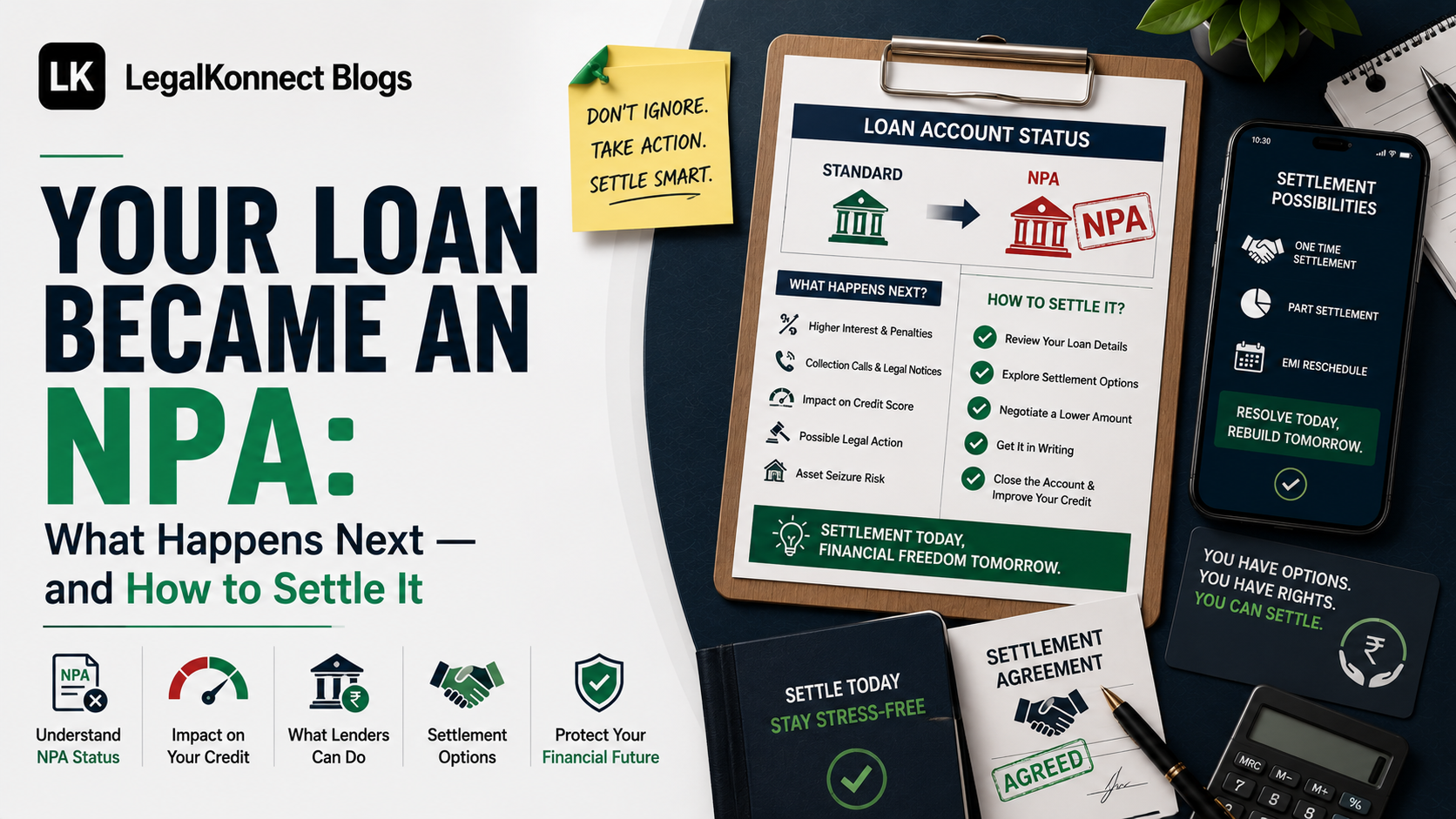
Here's the short answer. An NPA — the label a bank puts on a loan after 90 days of missed payment — is not the end. It starts a recovery process with clearly defined stages, and at each stage you have specific rights and specific deadlines. And it's the moment the bank is most willing to settle for less than you owe.
Sit with that last part. The classification that feels like a disaster is, used right, your leverage. But what the bank can actually do to you turns on one fact — is the loan secured or unsecured. So let's walk through it properly.
When you take a loan, the bank counts it as an asset — it's supposed to earn income through your EMIs. The day it stops doing that, it's "non-performing."
RBI's norms are precise about when that day arrives: if the interest or principal stays overdue for more than 90 days, the account is an NPA. After that, it's graded further:
Sub-standard asset — an NPA for 12 months or less.
Doubtful asset — an NPA for more than 12 months.
Loss asset — where recovery is treated as negligible.
(You'll also hear "Gross NPA" and "Net NPA." Those are the bank's total bad loans before and after it sets money aside to cover them. They matter to the bank's balance sheet, not to your case.) As of early 2024 the gross NPA ratio of Indian banks had fallen to roughly 2.8%, a multi-year low. Why should you care? Because banks are under less pressure now, so they run recovery and settlement methodically rather than in a panic. That cuts both ways.
What matters for you is what the tag triggers. So here's the timeline.
Before a loan is ever called an NPA, RBI makes banks flag it as a "Special Mention Account" (SMA) — an early-warning tag. Three sub-stages, based purely on days overdue:
SMA-0 — 1 to 30 days overdue
SMA-1 — 31 to 60 days overdue
SMA-2 — 61 to 90 days overdue
So what does this mean for you? There's roughly a three-month runway between your first missed EMI and the NPA tag. This is the cheapest window to act in. The loan isn't formally bad yet, no recovery machinery has started, and one honest call about a job loss or a medical emergency can often get you a restructuring before anything hardens. Most borrowers spend this window dodging the bank's calls. That's the most expensive mistake in the whole process.
One thing to know: once you slip into NPA, you can't pay a single EMI and get the "standard" tag back. RBI clarified in November 2021 that an account is upgraded only after the entire overdue interest and principal is cleared. Partial payment shows intent. It doesn't reset the label.
This is the part that scares people. It only applies if your loan has collateral — a home loan, a loan against property, a car loan, a business loan backed by an asset.
For these, the bank doesn't go to court first. It uses the Securitisation and Reconstruction of Financial Assets and Enforcement of Security Interest Act, 2002 — SARFAESI, mercifully shortened. Here's how it unfolds.
Step 1 — The Section 13(2) notice. The bank issues a written demand giving you 60 days to clear your dues. This is the formal starting gun. It can only come after your account is already an NPA, and only if your outstanding is at least ₹1 lakh (SARFAESI doesn't touch smaller amounts, or agricultural land).
Step 2 — Your right to object. Within those 60 days you can send a written objection — disputing the amount, the classification, anything. The bank must consider it and reply with reasons within 15 days. This right exists because of one case. In Mardia Chemicals Ltd. v. Union of India (2004) 4 SCC 311, the Supreme Court upheld SARFAESI as constitutional but read in this safeguard: your asset can't simply be taken without a chance to be heard. The same judgment scrapped an old rule that forced borrowers to deposit 75% of the dues just to appeal.
Step 3 — Section 13(4): possession. If the 60 days pass and you haven't paid or satisfied the bank, it can take possession of the secured asset. For a house, that's often "symbolic possession" first — a notice pasted on the door — and physical possession later, sometimes with a magistrate's help under Section 14.
Step 4 — Auction. The bank values the asset, publishes a sale notice (you get at least 30 days' notice of the sale), and auctions it.
So what does this mean for you? You're not powerless. But you're on a clock — and you have a court remedy.
Your appeal: the DRT, within 45 days. If the bank acts wrongly at any stage, your remedy is an application under Section 17 before the Debt Recovery Tribunal (DRT), filed within 45 days of the action. Note the order. You go to the DRT, not straight to the High Court. The Supreme Court was blunt about this in United Bank of India v. Satyawati Tondon (2010) 8 SCC 110 — exhaust the Section 17 remedy first; don't run to the High Court under Article 226. Skip the DRT and your writ usually gets dismissed, and you've burned the very time you needed.
Say the bank auctions your flat. You owed ₹40 lakh. In a slow market, the auction fetches ₹32 lakh. Most borrowers assume losing the house ends it.
It doesn't. Under SARFAESI, if the sale falls short of your dues, you still owe the balance — the ₹8 lakh "deficiency." The bank can chase you for it before the DRT. So you can end up owning nothing and still carrying a debt.
That one fact is the strongest reason to settle before an auction. In an auction you lose control of the price, and a low price leaves you holding the gap.
Here's the distinction that changes everything, and it's where most of the fear is misplaced. SARFAESI only works where there's a security interest — an asset pledged to the bank. A personal loan, a credit card outstanding, a consumer-durable loan has no collateral. There is nothing to seize under SARFAESI, because you never pledged anything.
So what can the bank do with an unsecured NPA? Sue you. If the amount is ₹20 lakh or more, the case goes to the DRT; below that, to a civil court. Both are slow and expensive for the bank — often three to five years before it sees a rupee.
What does that mean for you? Two things. No one is coming to take your house over an unpaid credit card. The agent on the phone implying otherwise is bluffing. And because the bank's recovery path is so slow, it has a strong reason to settle an unsecured NPA rather than litigate for years. Your bargaining position there is often better, not worse.
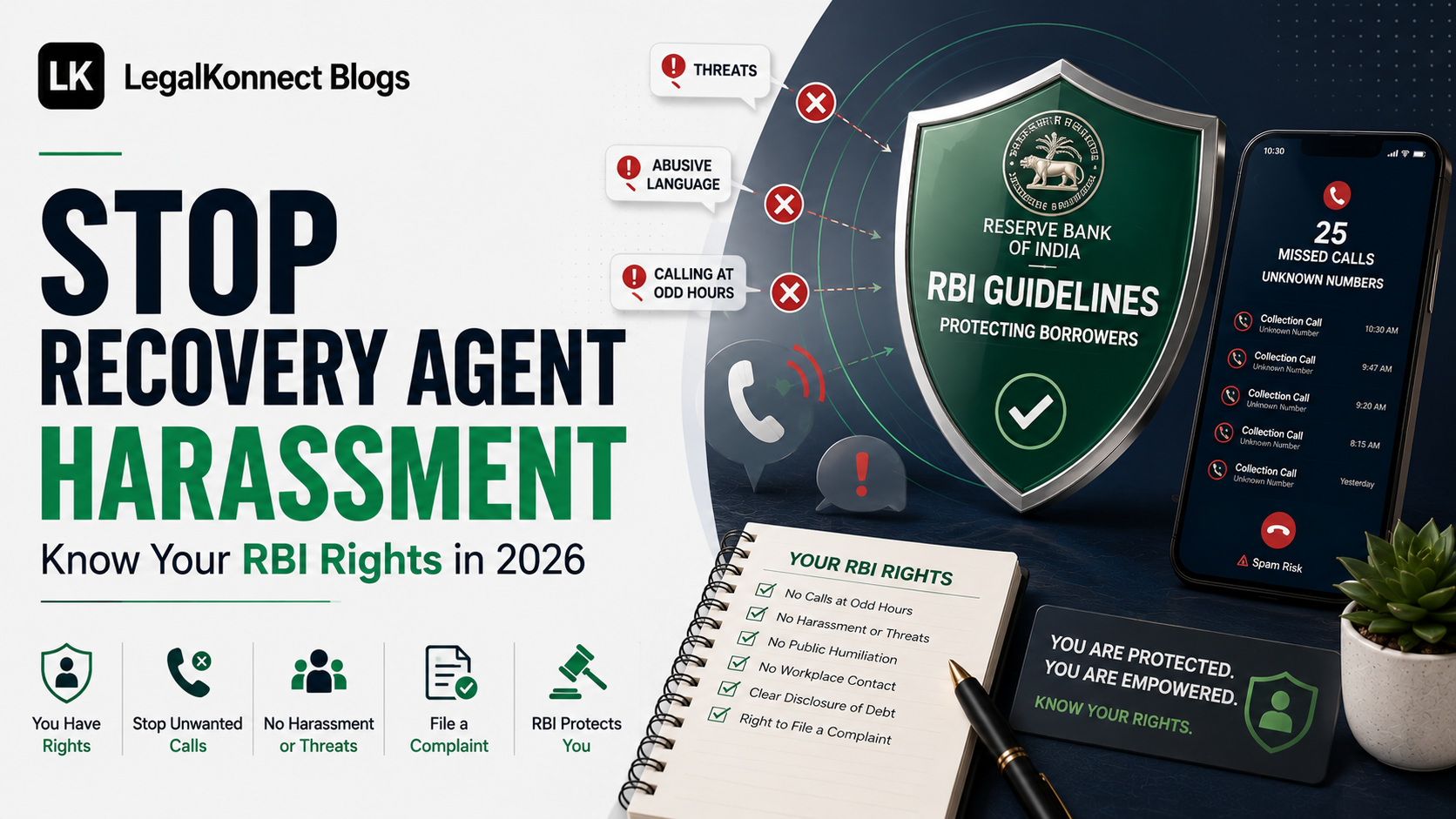
(The bank can still call, report the default to bureaus, and send recovery agents — but those agents follow RBI's conduct rules. No threats, no showing up at your door at 9 pm. That's a separate right worth knowing.)
Now the part that reframes the whole thing. Once your loan is an NPA, the bank has already, on its own books, partly written it off and set aside provisions against it. To the bank, cash today often beats a full recovery that takes three years through a tribunal — especially on an unsecured loan where recovery is doubtful.
That's exactly why a one-time settlement (OTS) exists. You pay a single lump sum that's less than the total outstanding, and the bank closes the account. RBI's June 2023 Framework for Compromise Settlements expressly lets banks do this under a board-approved policy. It's a normal banking process. Not a favour, not a scam.
How much less? It depends — how overdue you are, secured versus unsecured, the bank's policy, how realistic litigation looks to them. A heavily overdue, unsecured loan settles lower than a fresh, fully secured one. The point is simpler: the NPA tag is what brings the bank to the table at all.
The mistake here is negotiating from panic — grabbing the first number an agent throws out, or signing a settlement letter without reading what it says about the waived amount and how it'll be reported. This is the stage where a verified advocate usually pays for itself, because a bank treats a represented borrower very differently from a frightened one on the phone. (LegalKonnect's debt settlement service handles exactly this negotiation.)
A settlement clears the bank. It also leaves a mark, and the wording is everything.
When you pay an OTS for less than the full due, the account is usually reported as "Settled." That tag tells every future lender one thing: this person didn't pay in full. It hurts your score and stays on your report for about seven years.
Now compare "Closed" — what shows when a loan is paid in full. Clean. Neutral. No flag.
So what does this mean for you? When you negotiate, the amount isn't the only thing on the table. The reporting status is too. Where you can, push for the account to be reported as "Closed" rather than "Settled," or at least know exactly how it'll appear before you sign. And recovery isn't instant: you rebuild by keeping every other obligation spotless, and the tag's bite fades with time. It's recoverable. Just plan for it.
Going silent is the worst move, and the most common one. It only pushes you down the timeline toward possession or a court case.
Find out which loan it is — secured or unsecured. That one fact tells you whether your asset is even in play.
Read every notice and write down the dates. A Section 13(2) notice starts a 60-day clock. A DRT challenge has a 45-day window.
Don't negotiate alone or from fear. Informed and represented changes how the bank treats you.
Work out your realistic settlement number before an auction works it out for you — that's exactly what LegalKonnect's debt settlement service is built to handle.
Common questions about Debt Settlement
About the Author
Adv. Urvashi Goswami
Verified advocate on LegalKonnect.
All articles are reviewed for legal accuracy before publication.
Meet the author